
 New
New


 Trending


Clinical Trial Audits vs Regulatory Inspections: Understanding the Key Differences
Introduction
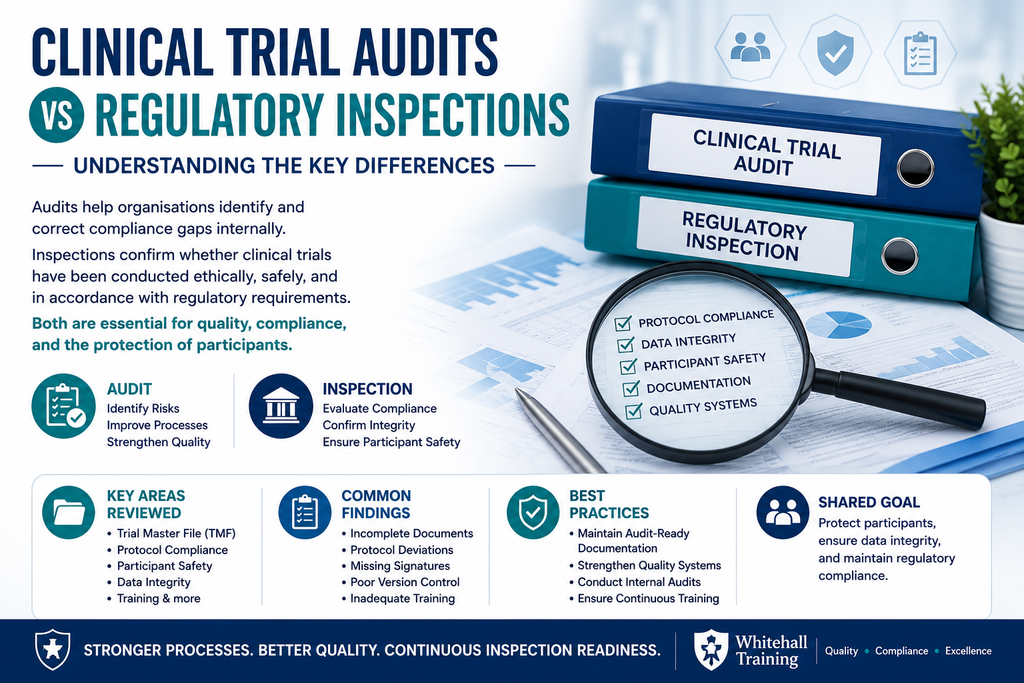
Clinical trial audits and regulatory inspections are fundamental components of quality management in clinical research. Although these terms are often used interchangeably, they serve distinct purposes and are conducted by different stakeholders.
Understanding the differences between audits and inspections enables sponsors, CROs, investigators, and clinical research professionals to strengthen compliance, improve operational quality, and prepare effectively for regulatory oversight.
This article explores the purpose of audits and inspections, how they differ, what regulators typically evaluate, and practical strategies organisations can adopt to maintain continuous inspection readiness.
What Is a Clinical Trial Audit?
Clinical trial audits are systematic and independent evaluations conducted to determine whether clinical trial activities comply with internal procedures, study protocols, Good Clinical Practice (ICH-GCP), and applicable regulatory requirements.
Audits may be performed by sponsors, Contract Research Organisations (CROs), or independent quality assurance teams to identify risks, verify compliance, and improve quality before regulatory inspections occur.
What Is a Regulatory Inspection?
Regulatory inspections are official assessments conducted by health authorities such as the FDA, EMA, or MHRA to verify that clinical trials have been conducted ethically, safely, and in accordance with regulatory requirements.
Unlike audits, inspections focus on determining whether organisations have consistently maintained compliance throughout the study lifecycle.
Clinical Trial Audits vs Regulatory Inspections
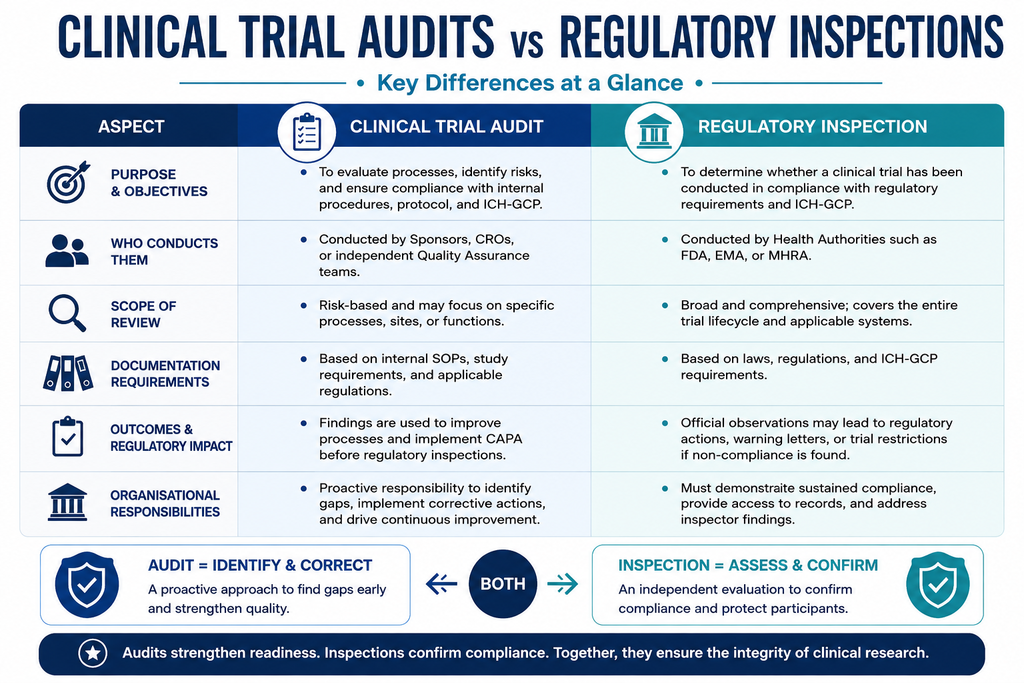
The article will compare both processes by explaining:
- Purpose and objectives
- Who conducts them
- Scope of review
- Documentation requirements
- Outcomes and regulatory impact
- Organisational responsibilities
What Do Regulators Typically Review?
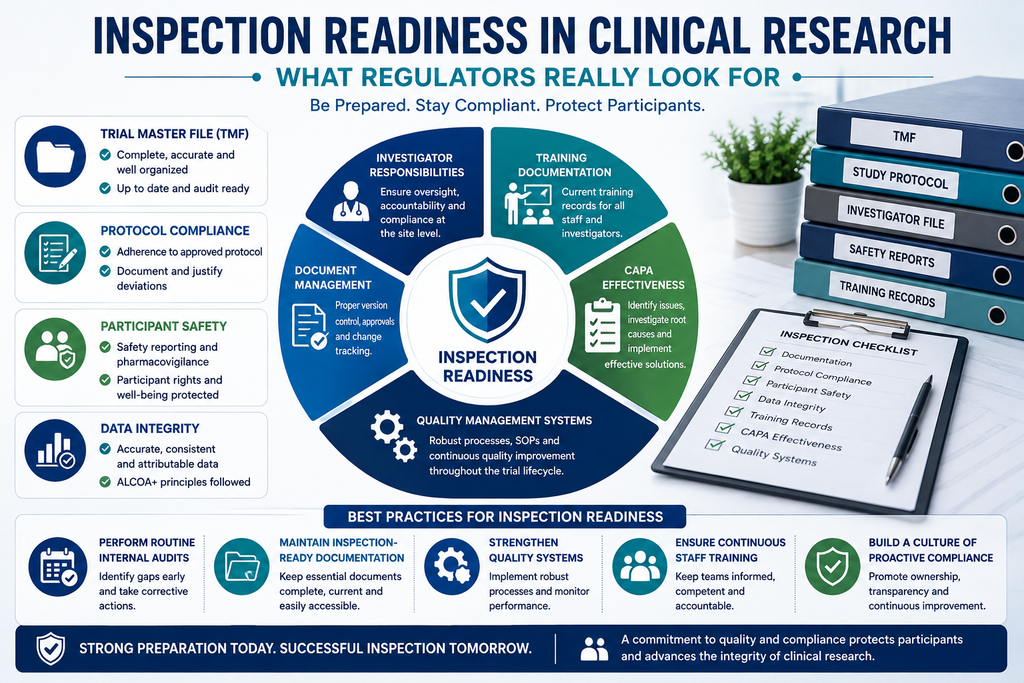
Key areas commonly assessed include:
- Trial Master File (TMF)
- Protocol compliance
- Participant safety
- Data integrity
- Investigator responsibilities
- Training documentation
- CAPA effectiveness
- Quality Management Systems
Common Findings During Audits and Inspections
The article will highlight common observations, including:
- Incomplete documentation
- Protocol deviations
- Missing signatures
- Poor document version control
- Inadequate training records
- Weak CAPA implementation
- Data integrity concerns
Best Practices for Successful Audit and Inspection Readiness
Readers will gain practical guidance on:
- Maintaining inspection-ready documentation
- Performing routine internal audits
- Strengthening quality systems
- Ensuring continuous staff training
- Building a culture of proactive compliance
Conclusion
While audits help organisations identify and correct compliance gaps internally, regulatory inspections confirm whether clinical trials have been conducted according to regulatory expectations. Understanding the differences between these processes enables organisations to strengthen quality systems, improve operational excellence, and maintain continuous inspection readiness.
