
 New
New


 Trending


Computer System Validation (CSV): Building Compliant Digital Systems in GxP Environments
Introduction
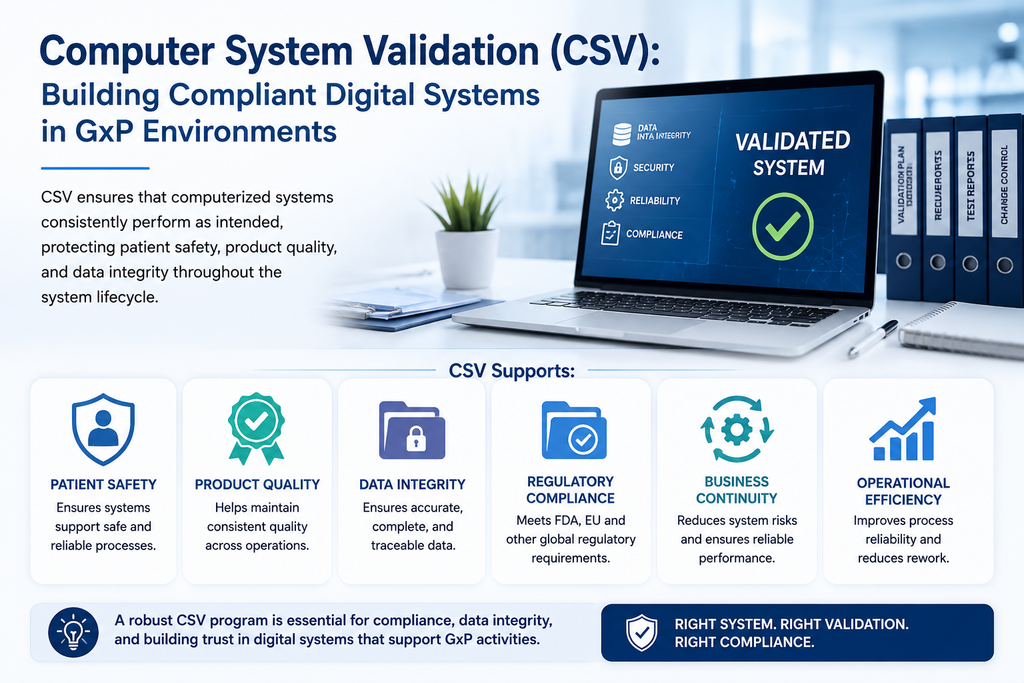
Digital technologies have become an essential part of pharmaceutical, biotechnology, and medical device operations. From electronic data capture systems to laboratory software and quality management platforms, computerized systems now support critical GxP activities across the product lifecycle.
To ensure these systems consistently perform as intended while maintaining patient safety, product quality, and data integrity, regulatory authorities require organisations to implement Computer System Validation (CSV).
This article explores the importance of CSV, current regulatory expectations, the validation lifecycle, common compliance challenges, and practical best practices for maintaining validated computerized systems.
What Is Computer System Validation?
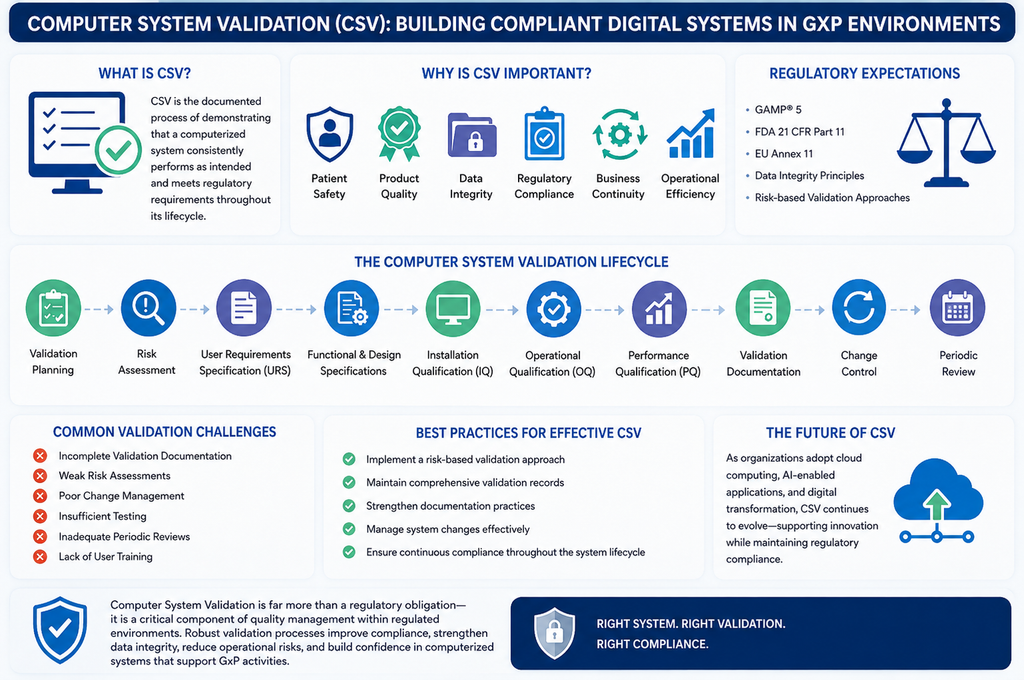
Computer System Validation is the documented process of demonstrating that a computerized system consistently performs according to its intended purpose while meeting regulatory requirements throughout its lifecycle.
Validation provides confidence that computerized systems generate reliable, accurate, and compliant data.
Why Is CSV Important?
The article will explain how Computer System Validation supports:
- Patient safety
- Product quality
- Data integrity
- Regulatory compliance
- Business continuity
- Operational efficiency
Regulatory Expectations
Readers will gain an overview of current regulatory frameworks including:
- GAMP® 5
- FDA 21 CFR Part 11
- EU Annex 11
- Data Integrity principles
- Risk-based validation approaches
The Computer System Validation Lifecycle
The article will describe each validation stage, including:
- Validation planning
- Risk assessment
- User Requirements Specification (URS)
- Functional and design specifications
- Installation Qualification (IQ)
- Operational Qualification (OQ)
- Performance Qualification (PQ)
- Validation documentation
- Change control
- Periodic review
Common Validation Challenges
Key challenges discussed will include:
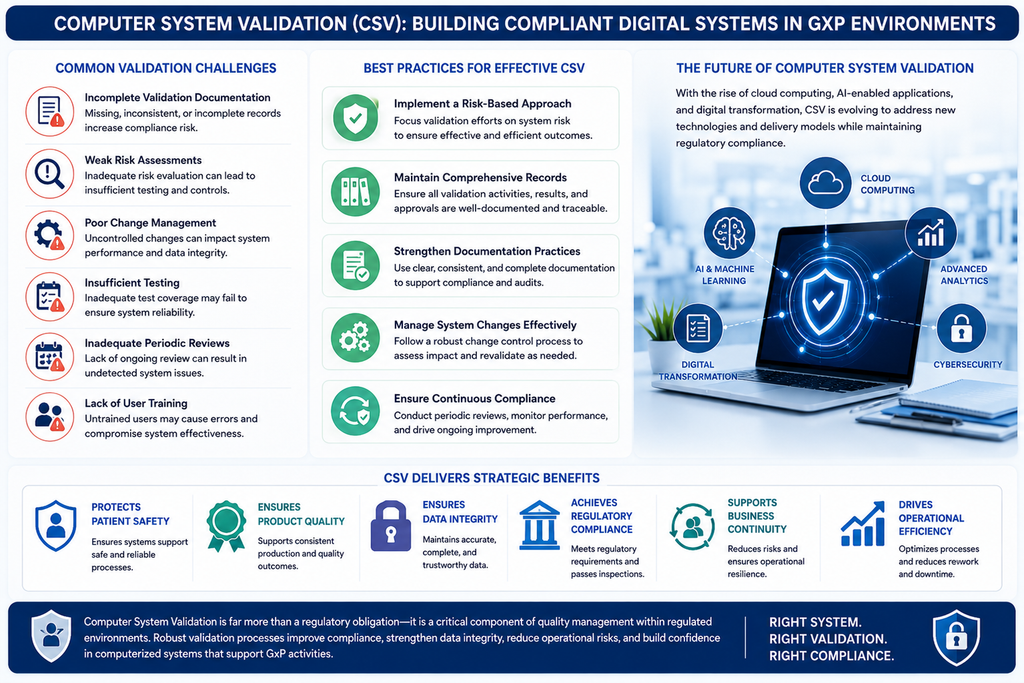
- Incomplete validation documentation
- Weak risk assessments
- Poor change management
- Insufficient testing
- Inadequate periodic reviews
- Lack of user training
Best Practices for Effective CSV
The article will provide practical recommendations for:
- Implementing a risk-based validation approach
- Maintaining comprehensive validation records
- Strengthening documentation practices
- Managing system changes effectively
- Ensuring continuous compliance throughout the system lifecycle
The Future of Computer System Validation
As organisations increasingly adopt cloud computing, AI-enabled applications, and digital transformation initiatives, CSV continues to evolve.
The article will briefly explore how modern validation approaches support emerging technologies while maintaining regulatory compliance.
Conclusion
Computer System Validation is far more than a regulatory obligation—it is a critical component of quality management within regulated environments. Organisations that establish robust validation processes improve compliance, strengthen data integrity, reduce operational risks, and build confidence in computerized systems that support GxP activities.
