
 New
New


 Trending


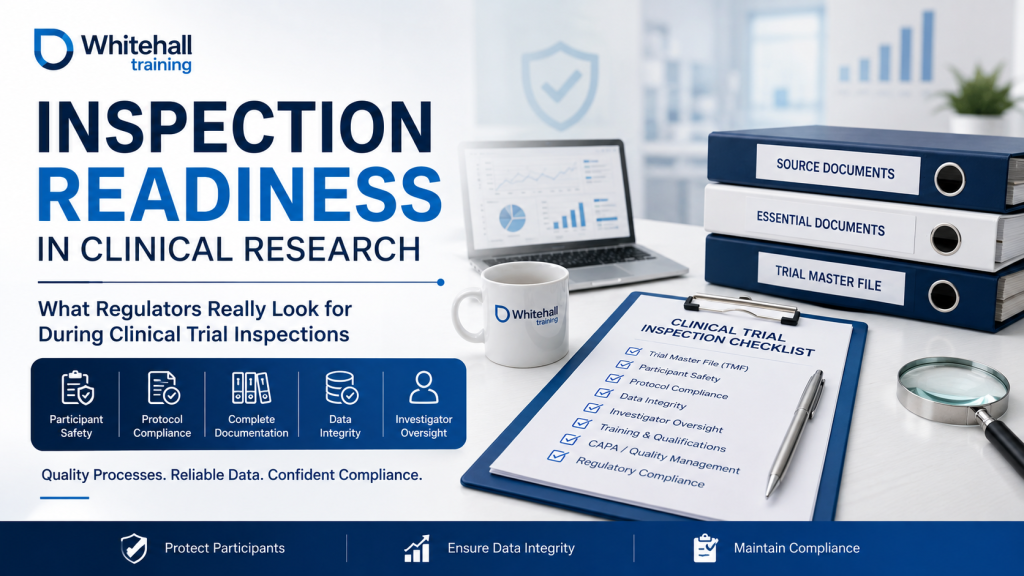
Inspection Readiness in Clinical Research: What Regulators Really Look for During Clinical Trial Inspections
Introduction
Clinical trial inspections are not simply regulatory checkpoints—they are comprehensive evaluations of how effectively a study has been planned, conducted, documented, and managed. Regulatory authorities such as the FDA, EMA, and MHRA assess whether participant safety has been protected, data integrity has been maintained, and Good Clinical Practice (GCP) requirements have been consistently followed.
Many organisations begin preparing only after receiving an inspection notice. However, successful inspections are rarely the result of last-minute preparation. Inspection readiness is built throughout the entire clinical trial lifecycle, beginning on the very first day of the study.
This article explores what regulators typically review during inspections, common compliance gaps, and practical strategies organisations can adopt to remain inspection-ready at all times.
What Is Inspection Readiness?
Inspection readiness refers to an organisation’s ability to demonstrate, at any point during a clinical trial, that the study has been conducted in accordance with the approved protocol, applicable regulations, and ICH Good Clinical Practice (GCP).
It involves maintaining complete documentation, effective quality systems, trained personnel, and consistent operational processes throughout the study—not only when an inspection is announced.
What Do Regulators Commonly Review?
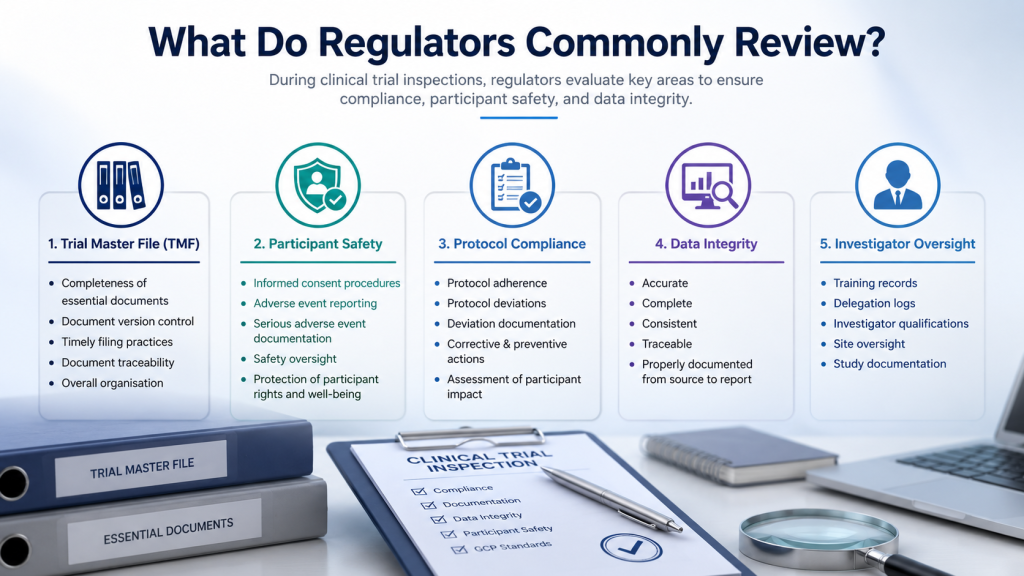
1. Trial Master File (TMF)
The Trial Master File provides evidence that a clinical trial has been conducted in compliance with regulatory requirements.
Inspectors evaluate:
- Completeness of essential documents
- Document version control
- Timely filing practices
- Document traceability
- Overall organisation of the TMF
2. Participant Safety
Protecting participants remains the highest priority during every inspection.
Regulators verify:
- Proper informed consent procedures
- Timely reporting of adverse events
- Serious adverse event documentation
- Safety oversight throughout the study
- Protection of participant rights and well-being
3. Protocol Compliance
Inspectors review whether study activities were performed according to the approved protocol.
Key areas include:
- Protocol deviations
- Documentation of deviations
- Corrective and preventive actions
- Assessment of participant impact
- Ongoing protocol oversight
4. Data Integrity
Reliable clinical data depends on accurate documentation and controlled processes.
Regulators examine whether data is:
- Accurate
- Complete
- Consistent
- Traceable
- Properly documented from source records to final reports
5. Investigator Oversight
Inspectors also assess whether investigators have fulfilled their responsibilities throughout the study.
This includes reviewing:
- Training records
- Delegation logs
- Investigator qualifications
- Site oversight
- Study documentation
Common Inspection Findings
Many inspection observations result from routine operational issues rather than major regulatory failures.
Common findings include:
- Missing or incomplete documentation
- Delayed document filing
- Inadequate protocol deviation management
- Poor document version control
- Missing signatures or dates
- Incomplete staff training records
- Inconsistent source documentation
Most of these findings can be prevented through proactive quality management and continuous compliance practices.
Best Practices for Continuous Inspection Readiness
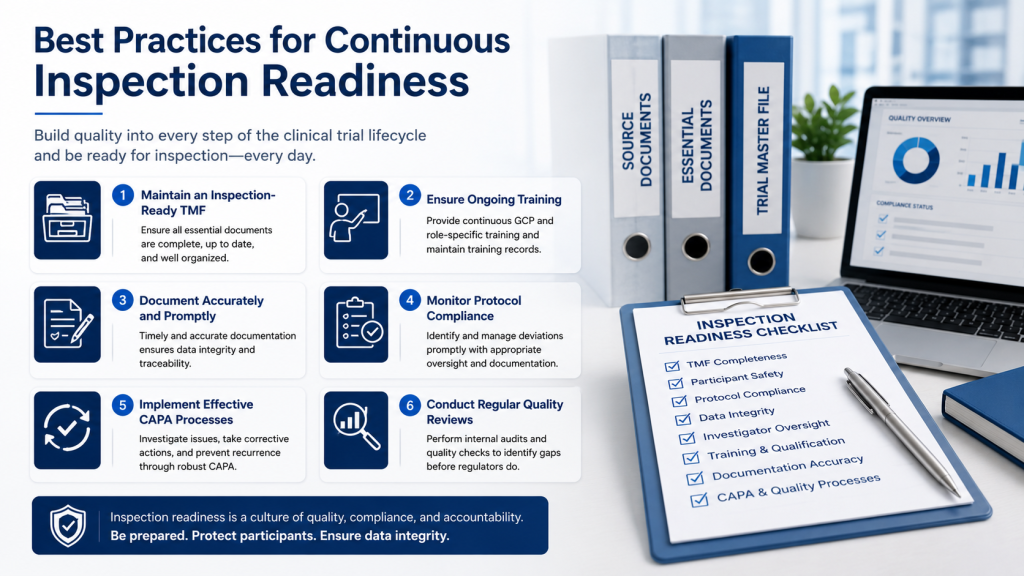
Organisations can strengthen inspection readiness by:
- Maintaining an inspection-ready Trial Master File throughout the study.
- Performing regular internal quality reviews.
- Providing continuous GCP and role-specific training.
- Documenting activities accurately and promptly.
- Monitoring protocol compliance on an ongoing basis.
- Implementing effective CAPA processes when issues are identified.
- Encouraging a culture of quality rather than reactive compliance.
Why Inspection Readiness Should Be a Continuous Process
Inspection readiness is not a project that begins when regulators announce a visit. It is an ongoing commitment to quality, documentation, and compliance throughout every phase of a clinical trial.
Organisations that integrate inspection readiness into their daily operations are better positioned to protect participant safety, maintain data integrity, and successfully navigate regulatory inspections with confidence.
Conclusion
Clinical trial inspections evaluate much more than documentation—they assess the overall quality systems supporting the study.
By maintaining accurate records, ensuring protocol compliance, protecting participant safety, and fostering a culture of continuous quality improvement, organisations can significantly reduce inspection risks while improving the overall quality of clinical research.
Inspection readiness should never be viewed as a last-minute activity. It is a continuous process that begins with the first study activity and continues until trial completion.
